Workshop Spotlight: Designing an Imaginary Planet
At Re-Street, we believe that every child deserves to have a voice in shaping the places where they grow up. But listening to children is not a one-size-fits-all process. Every age group experiences and expresses the world differently, and that means every workshop must be carefully adapted to meet them where they are.
This workshop was particularly special because it focused on children aged five and six.
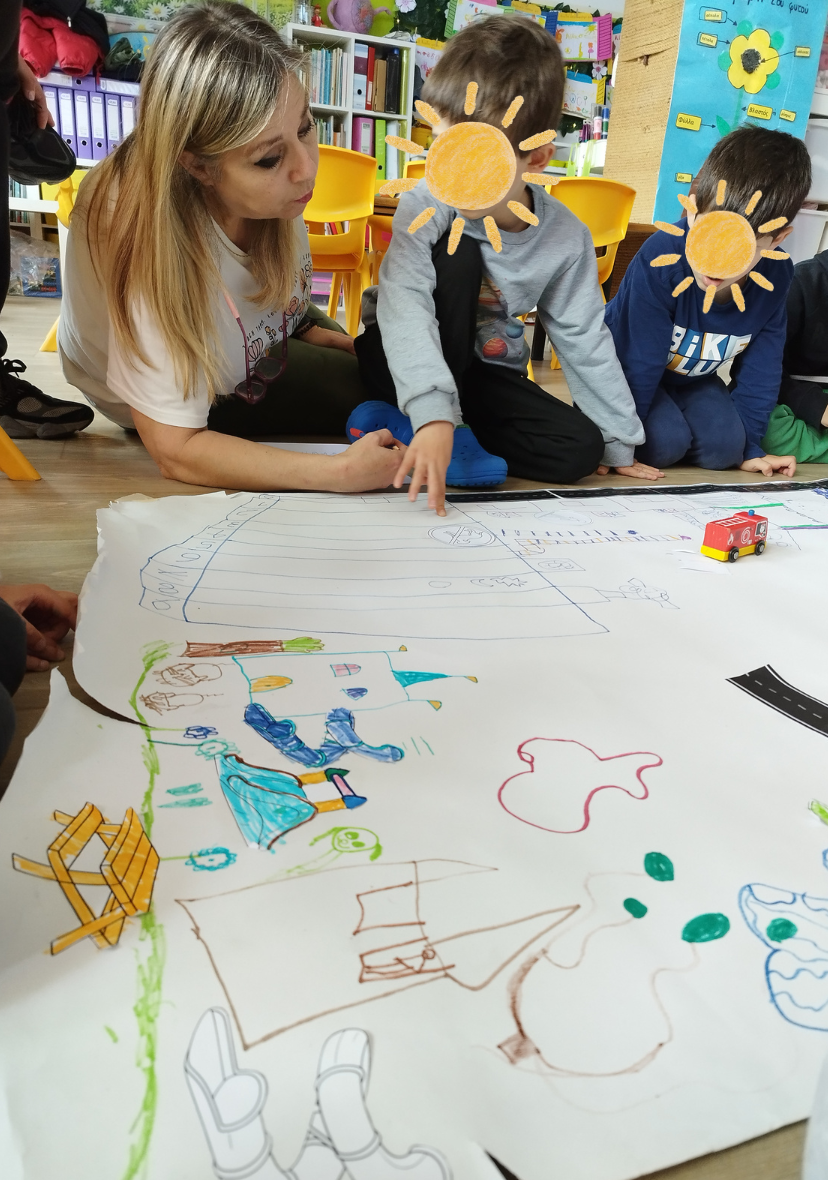
We were invited by Kindergarten "To Rodi" in Patras, Greece, to explore how our youngest participants imagine a city. Before the workshop began, we worked closely with the school's experienced teachers, Patroula Karali and Eleni Soutzoglou, who have more than thirty years of experience in early childhood education. Their guidance helped us understand how children of this age think, communicate and engage with creative activities. Their insights became an essential part of shaping the workshop.
One of the first things we learned was that asking young children to redesign an existing neighbourhood could easily become overwhelming. A real city contains countless elements competing for attention, making it difficult for children to organise their thoughts and ideas.
So instead of starting with a map, we started with a story.
Together, we travelled to an imaginary planet where nothing existed yet. There were no roads, no houses, no parks, no shops and no animals. The children became the first inhabitants of this new world. Before drawing anything, we sat together and talked about what makes a place worth living in. What do people need? What makes us happy? What should our planet have?
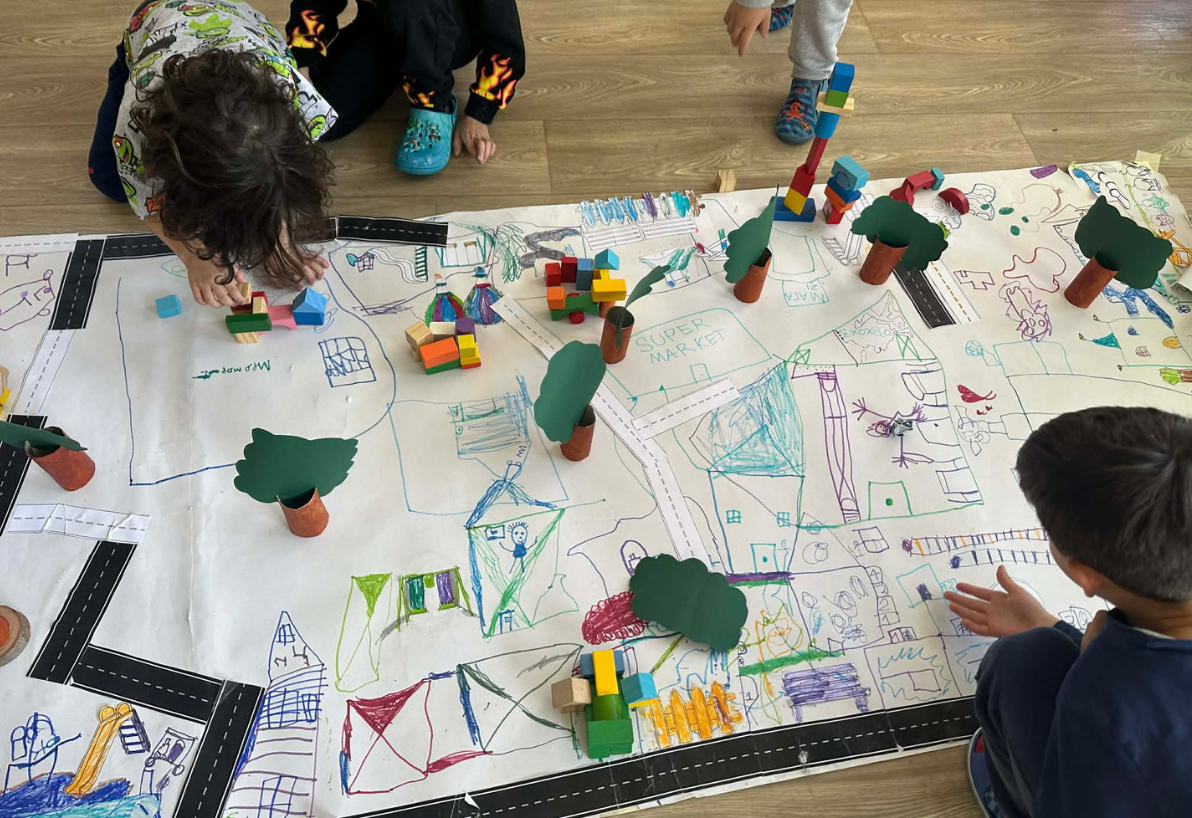
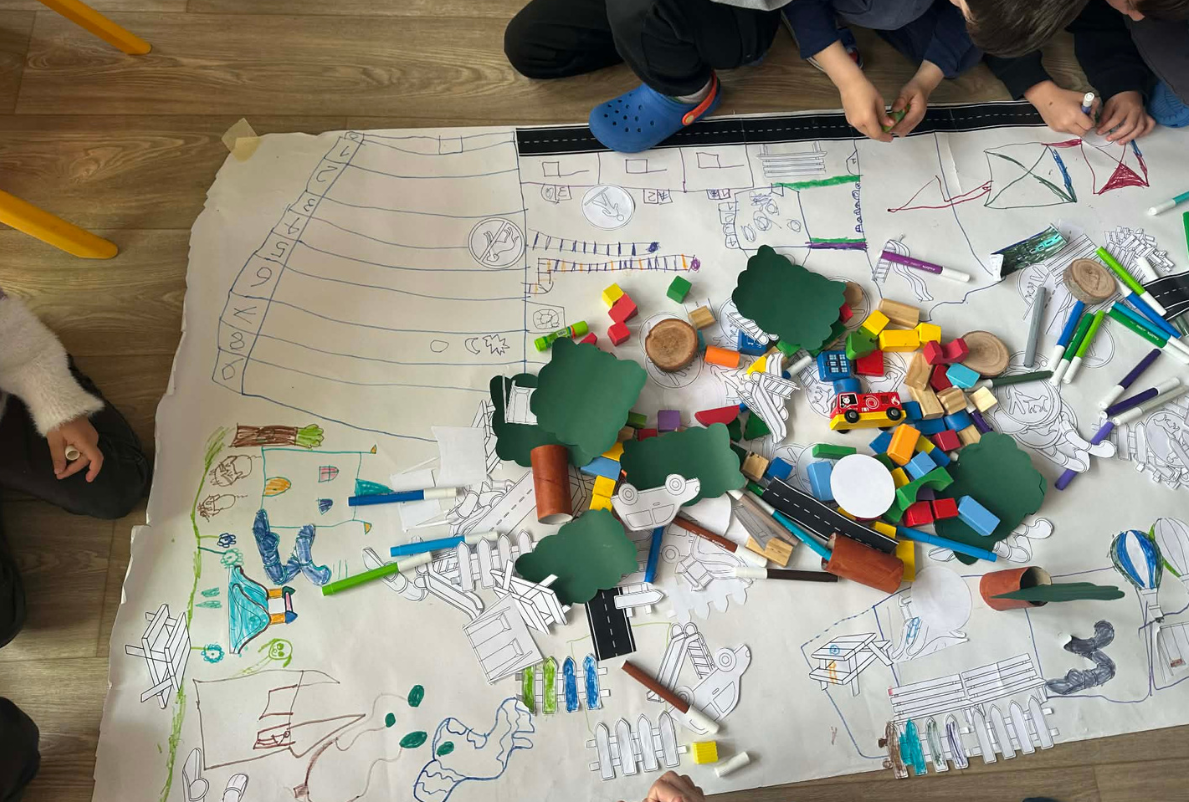
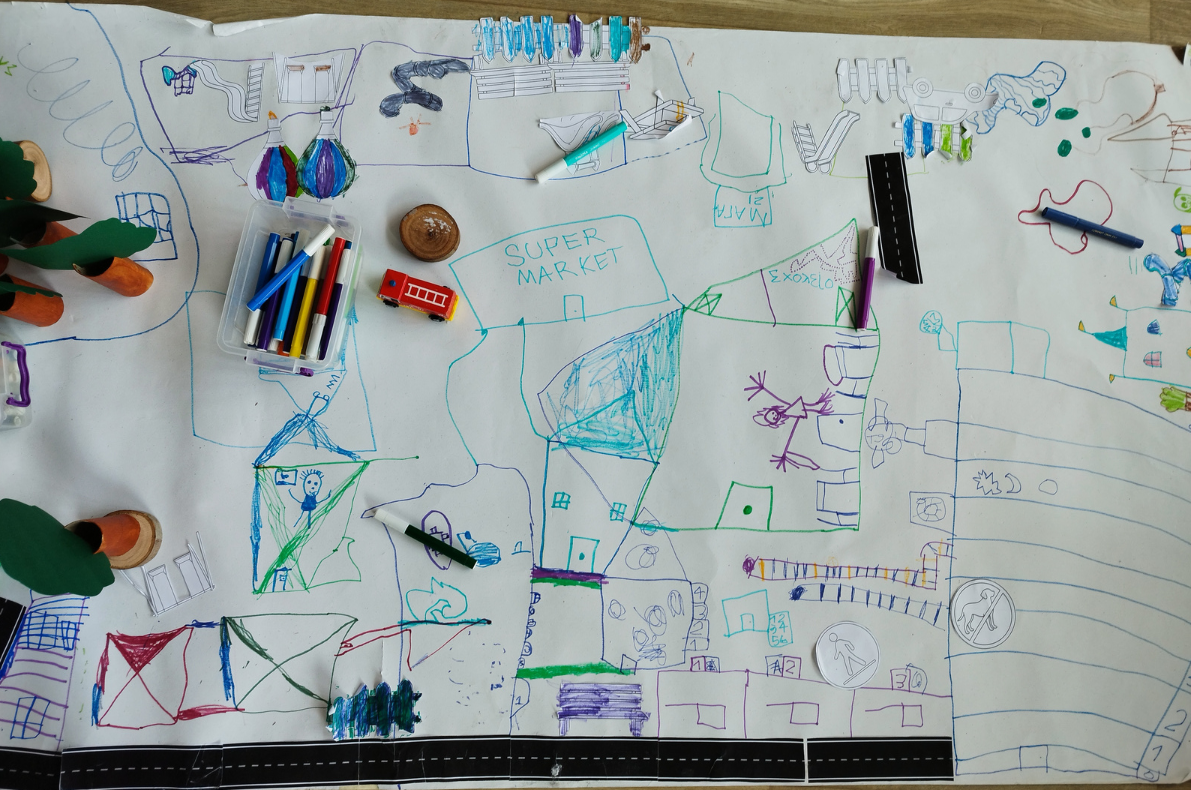
Rather than giving each group a map, we rolled out large sheets of paper and divided the children into small teams. Each team focused on one theme, such as housing, parks or roads and infrastructure. This approach, recommended by their teachers, allowed the children to concentrate on one idea at a time instead of trying to design an entire city all at once. At this age, clear questions and simple tasks encourage children to express themselves more confidently and reduce the feeling of being overwhelmed.
To help them get started, we provided a selection of printed elements that they could use if they wished. These were not instructions or limitations, but simply prompts to spark their imagination. Many children chose to create their own ideas instead.
Halfway through the workshop, we paused the drawing activity and invited each group to present what they had created so far. As the children listened to one another, new ideas began to emerge. Their classmates' drawings inspired them to expand their own worlds, adding new places and connections that had not existed before.
As the imaginary planet grew, it became filled with colourful parks, playgrounds, slides, dog parks, flowers, trees, supermarkets, apartment buildings, observatories, factories and many other ideas that reflected the children's interests and everyday experiences.
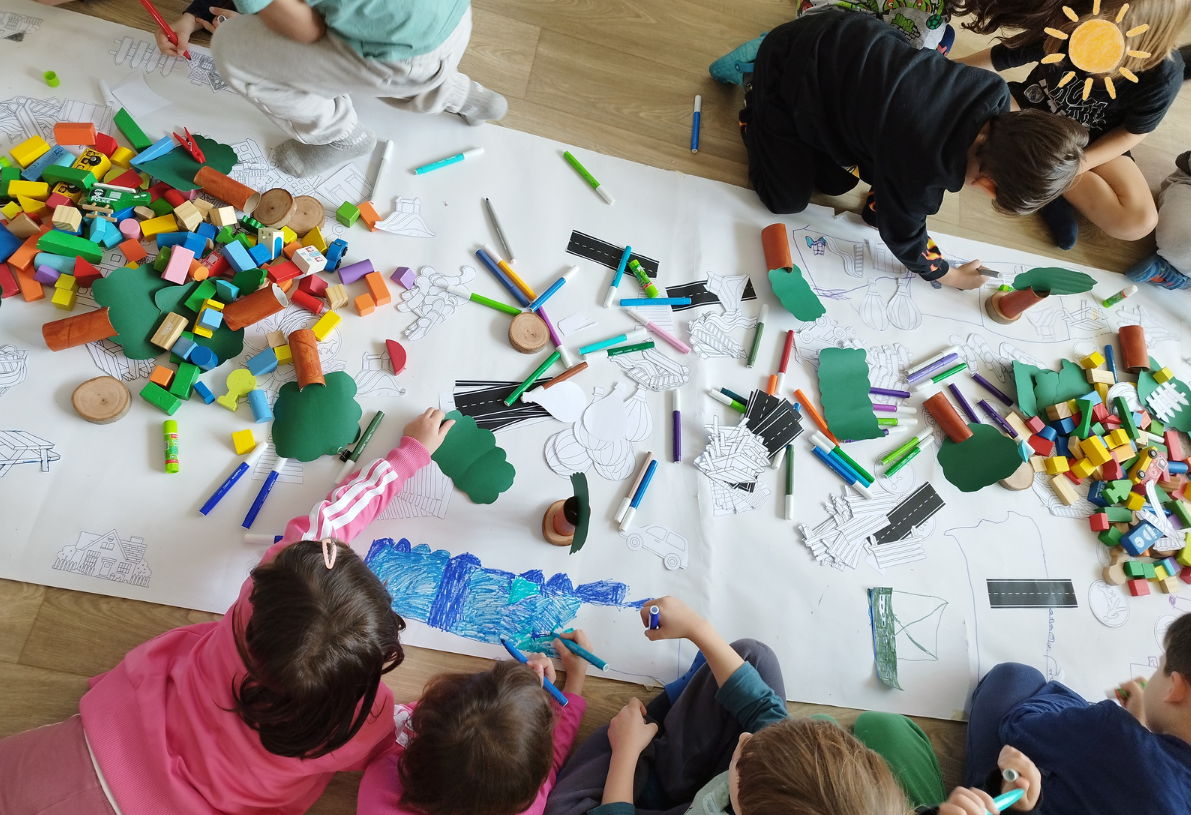
Once the collective drawing was complete, each child received wooden blocks and was invited to build one building they believed every city should have. The variety of answers was fascinating. Some children built houses, others created libraries, while several chose car repair shops.
Before saying goodbye, the children gave their new world its own identity. Together they decided to call it "The Colourful Planet." It was a simple but powerful choice. For them, colours were not just decoration. They represented joy, creativity and a place where they wanted to spend time.
This workshop reminded us that meaningful participation begins with understanding the people we are inviting to participate. Listening to young children requires patience, flexibility and a willingness to rethink our own assumptions. By adapting our methods instead of expecting children to adapt to ours, we created a space where imagination could flourish naturally.
Sometimes, the best way to understand a city is to begin with a completely empty planet.