
From play to planning: integrating children’s perspectives into neighborhood design
As part of Rechtvaardige Straat event, Re-Street was invited to work with grades 7 and 8 at Vossenburcht Elementary School. The school is located next to Treubstraat, with a small park in between. The park area is heavily neglected and not safe for young children: it is surrounded by several sets of fences and bordered by roads on all sides.
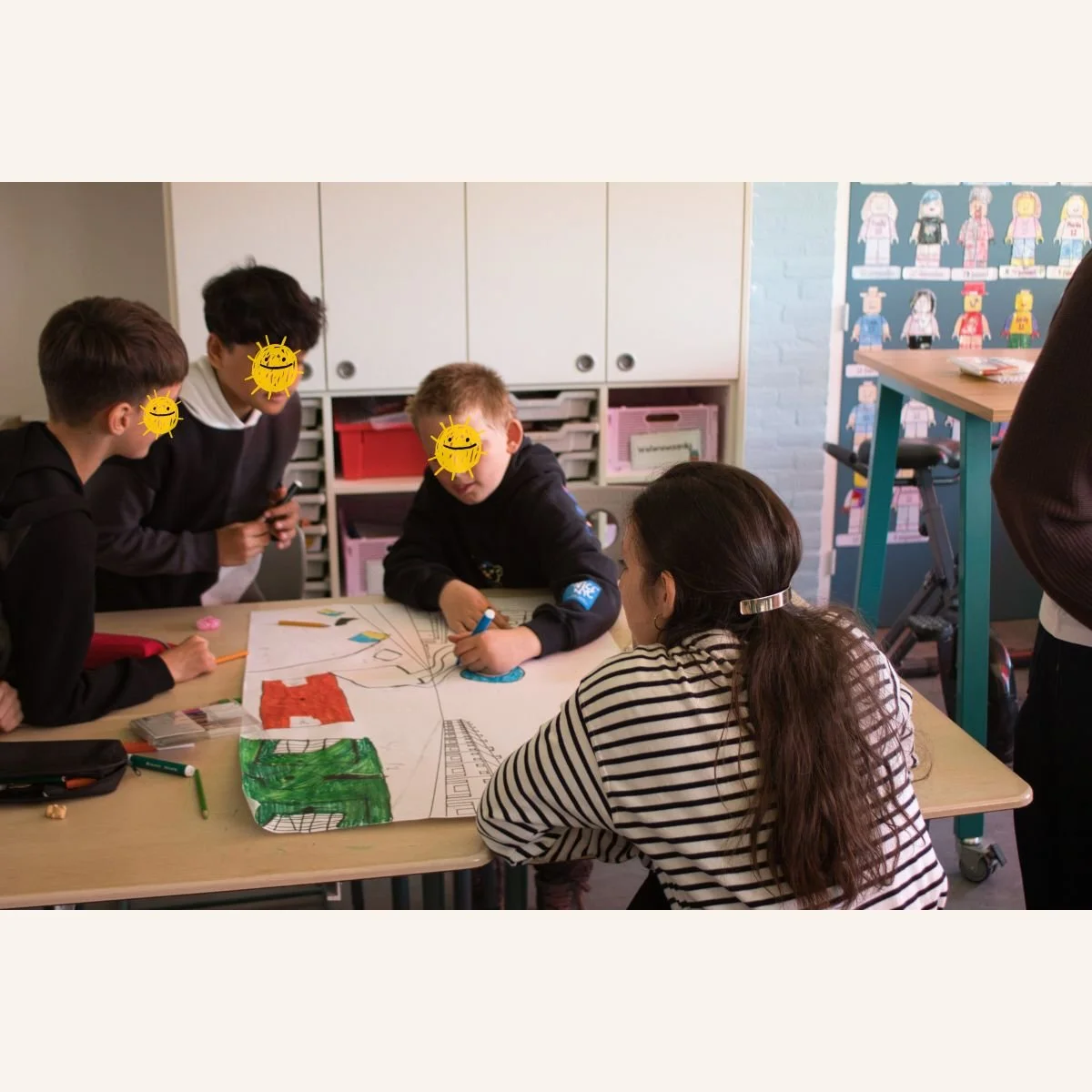
Our goal was to visualize a better space for children to spend time in. We wondered what children would change in their school’s backyard if they were given the power to build anything they wanted. In the final results, we can clearly see a desire to open up the area by removing fences and adding picnic areas (more tables and more benches), different playground elements, a climbing wall, a flower path, and tree houses (with electricity inside to charge phones).
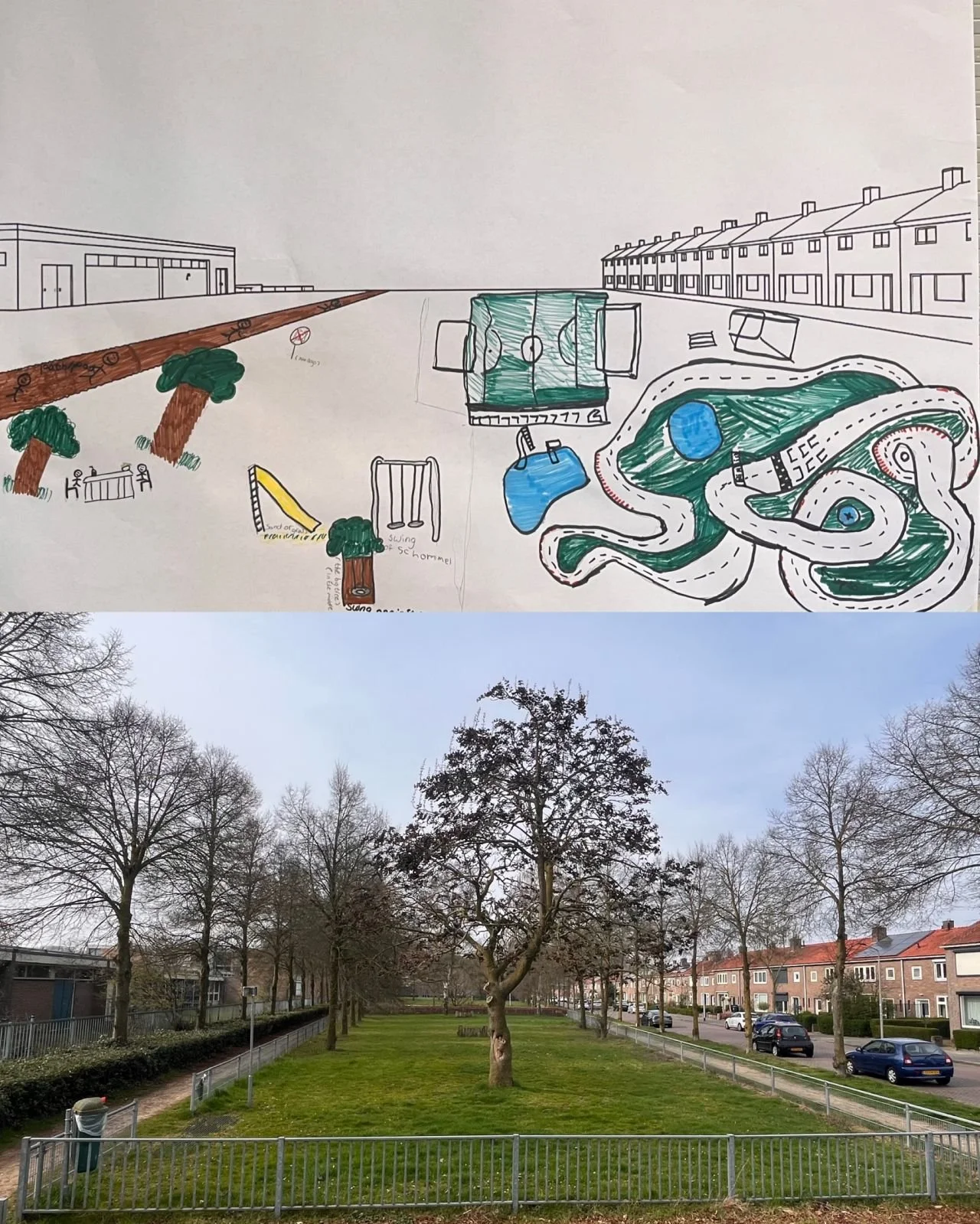
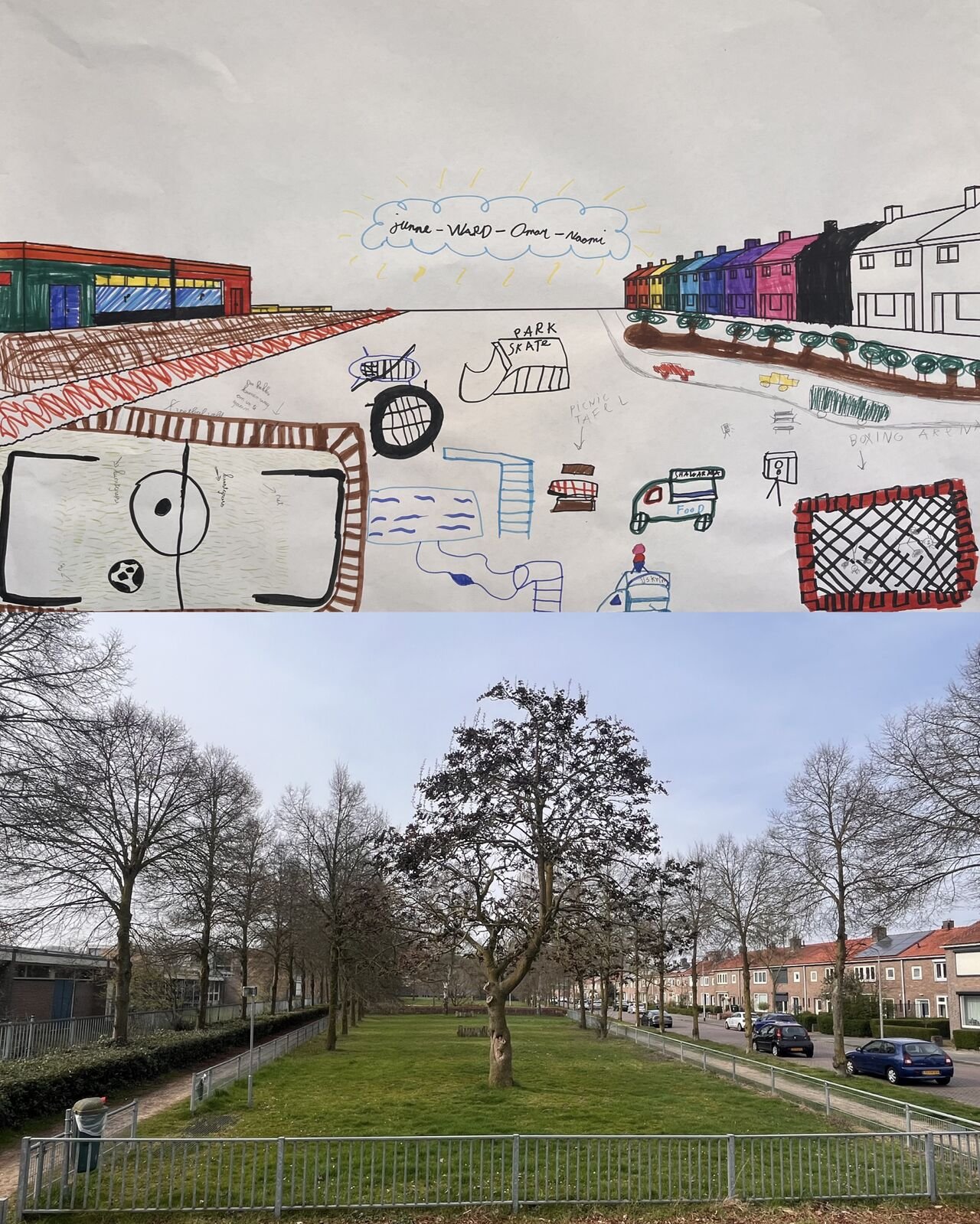
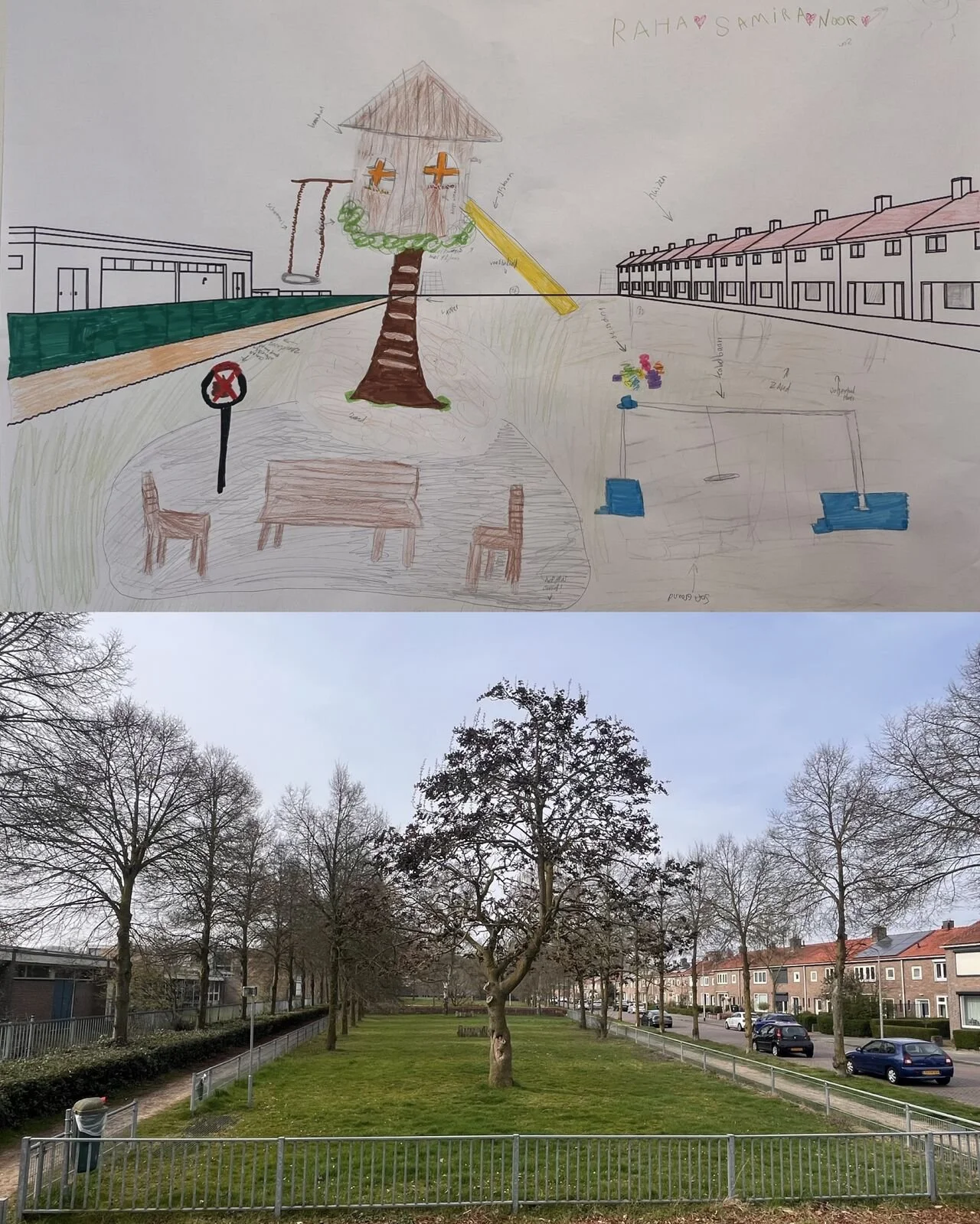
What lessons do we learn from this?
1. Children associate safety with openness and visibility, not enclosure.
2. Child-friendly spaces should support social life, not only physical activity.
3. Participation reveals needs that adults may overlook.
4. Children value ownership and agency in shaping their environment.
If we want to plan cities that work for children, we must first listen to them.